Recent Posts

Dec 12, 2009

Why Toyota and not Toyoda?

Photobucket
Toyota Motor Corporation, Japan's largest car maker was founded by Kiichiro Toyoda but ever wonder why the company was named Toyota and not Toyoda?

Back in 1936, in anticipation for the launch for the Model AA, which was Toyota's first passenger car, Toyoda held a public competition to establish a new symbol mark to promote its vehicles. The company indicated that the new design should convey the feeling of speed. Twenty-seven thousand entrants answered the call and submitted their ideas to Toyoda. The winning design led to a change in the name of the automobiles and plants from "Toyoda" to "Toyota." The name change made the Japanese lettering more streamlined and was also chosen because the number of strokes to write Toyota in Japanese (eight) was thought to bring luck and prosperity. The sound of the word "Toyota" was also deemed more appealing.

Source: http://www2.toyota.co.jp/en/vision/traditions/nov_dec_04.html

Dec 11, 2009

How astronauts go to toilet in space?

The Shower
Smart astronauts take long thorough baths before taking off because there is no shower in the space shuttle! So astronauts have to wash themselves with wet washcloths, using soaps that do not need to be rinsed and they bring plenty of towels to dry themselves with. For privacy, they extend the curtain of the WCS (Waste Collection System), the toilet or bathroom.

Photobucket
Brushing Teeth
Expectorating or spitting in a near weightless environment is never a good idea and so dental consultants of NASA developed a foamless toothpaste that can be swallowed. It is called NASAdent and they are now available in the market. Astronauts who can not bring themselves to swallow the toothpaste, or who have brought their own favorite brands sometimes spit into a washcloth.

Photobucket
Toilet Use
Since there is no gravity to either hold a toilet bowl full of water in place or pull human wastes down, NASA had to develop a way to use air flow to make the urine or feces go where they wanted to. The toilet which can be used by either men or women is designed to be as similar as those on Earth except for some changes. Straps are in place to hold feet against the floor and over the thighs to make sure that the astronauts don't float away. seated. Since the system operates on a vacuum, the seat is designed so the astronaut's bottom can be perfectly flush to make a good seal.

Besides the main toilet bowl, there is a hose, which is utilized as a urinal by men and women. It can be used in a standing position or can be attached to the commode by a pivoting mounting bracket for use in a sitting position.

The human waste is separated and solid wastes are compressed and stored on-board, and then removed after landing. Waste water is vented to space, although future systems may recycle it. The air is filtered to remove odor and bacteria and then returned to the cabin.

Dec 7, 2009

Is it Wise to remove Wisdom tooth?

Photobucket
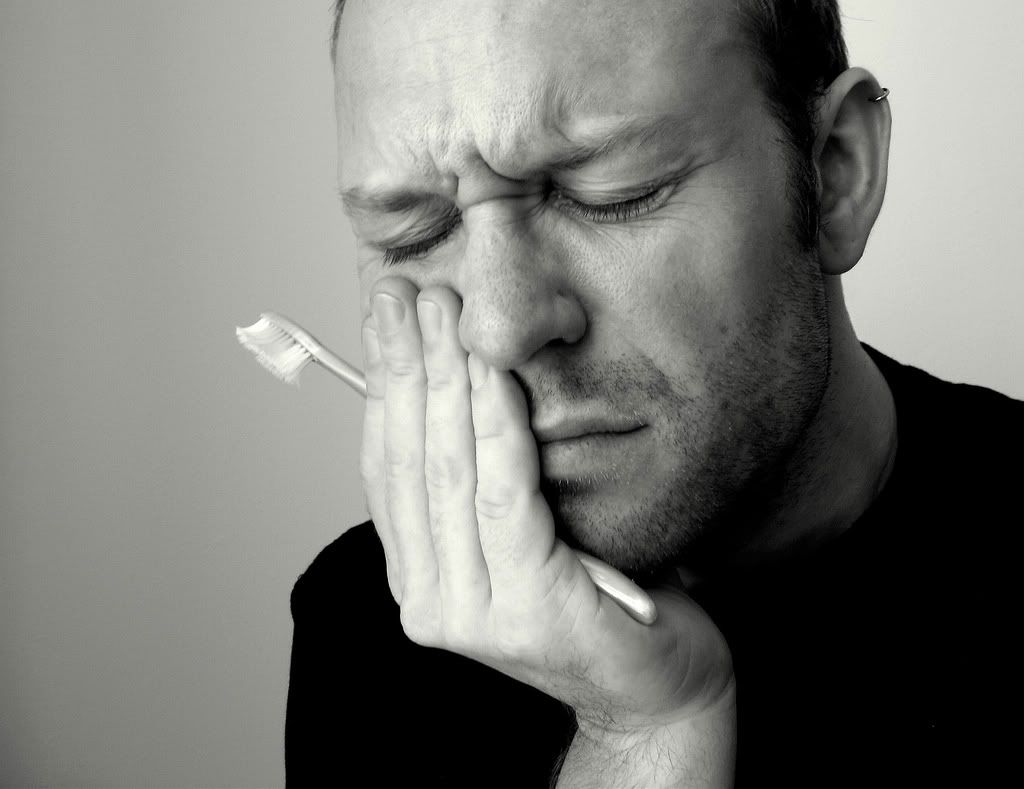
Wisdom tooth or third molar extraction is expensive, and recovering from the surgery is no easy feat, considering that pain, bleeding, swelling, infection and nerve injury are but a few of the complications. Still, removing wisdom teeth is recommended by many dentists to avoid the pain and periodontal disease that results from an impacted tooth. The surgery should be done during young adulthood, before the teeth attach to the jaw and become too difficult to extract.

In 2007, however, dentist Jay W. Friedman claimed in the American Journal of Public Health that at least two-thirds of wisdom tooth extractions are unnecessary. He and some other dentists argue that these teeth will come in at the proper position and cause no trouble. These dentists say that instead of simply doing preventative removals for most young people, we should only remove wisdom teeth that are impacted. Other dentists say that these teeth are still difficult to clean and should be removed.

Source: http://health.howstuffworks.com/no-wisdom-teeth2.htm

Dec 5, 2009

World's Smallest Snowman

Photobucket
He is just 0.01 mm across and measures about a fifth of the width of a human hair — the world’s smallest ‘snowman’ can be found in a British laboratory.

Scientists at the National Physical Laboratory (NPL) in West London have created the smallest ever miniature figure from two tin beads, usually used to calibrate electron microscope lenses, which were welded together with platinum.

Photobucket
A focused ion beam was used to carve the snowman’s eyes and smile, and to deposit a tiny blob of platinum for the nose, The Telegraph reported.

It was put together by Dr David Cox, a member of the Quantum Detection group at the laboratory, who also took the picture.

However, Britons searching for the real thing will have to head for the northern hills of Scotland, where forecasters say there is a chance of snow falling over the weekend.

The NPL is one of Britain’s leading science facilities and research centres. It is a world-leading centre of excellence in developing and applying the most accurate measurement.

Source: http://www.hindustantimes.com/News-Feed/europe/The-World-s-smallest-snowman/Article1-483157.aspx

Dec 4, 2009

Can You See the Great Wall of China from Space?

Photobucket
This is a popular myth - the Great Wall of China is the only human structure that can be seen from space. Well, it's not true. The reality is that you can't easily see the wall from space with the naked eye.

In fact, China's first astronaut, Yang Liwei, went into space, said that he couldn't see the structure of the wall from out his capsule window.

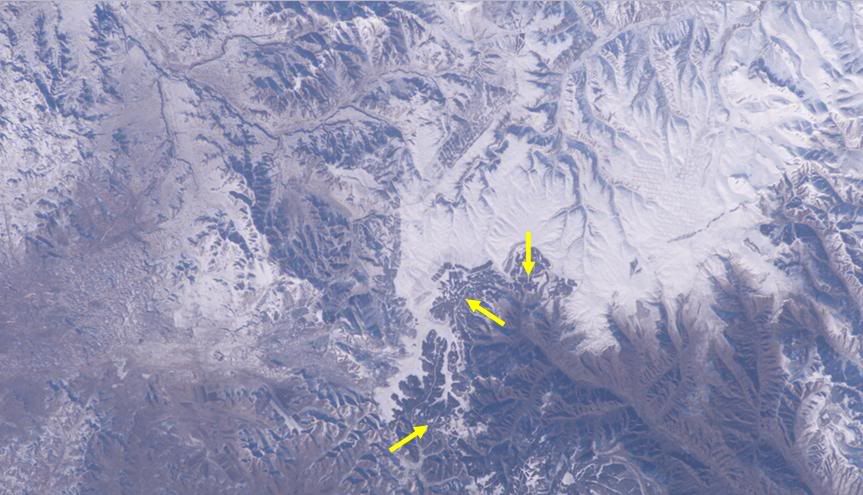
NASA astronaut Leroy Chiao attempted to photograph the Great Wall of China from out his window on the International Space Station. He photographed a region of Inner Mongolia, about 200 miles north of Beijing. Chiao and NASA believe they can identify parts of the Great Wall in his photograph, but it's not easy to see.

The ancient pyramids at Giza are easy to see out the window of the International Space Station, however.

This myth goes even further, though. People somehow think that the Great Wall of China can be seen from the Moon. The Apollo astronauts confirmed that you can't see the Great Wall of China from the Moon. The best you can see is the white and blue marble of our home planet.

For more details: http://www.nasa.gov/vision/space/workinginspace/great_wall.html

Dec 3, 2009

Brothers living in cave inherit $6.6 billion

Photobucket
Zsolt and Geza Peladi and a sister who lives in the US are each to receive a share of a $6.6 billion inheritance. The broke brothers living in a cave on the outskirts of Budapest, Hungary and selling scrap for pennies are now on the verge of inheriting their grandmother’s fortune. Their maternal grandmother died recently in Germany, entitling the pair to a share of her estate.

"We knew our mother came from a wealthy family but she was a difficult person and severed ties with them. She later abandoned us and we lost touch with her and our father until she eventually died", said 43-year-old Geza.

"If this all works out it will certainly make up for the life we have had until now – all we really had was each other. No women would look at us, living in a cave. But with money maybe we can find a partner and finally have a normal life.

Details of the wealthy grandmother have been kept secret to deter fraudsters.

Source: http://www.metro.co.uk/news/world/802591-hungarian-cave-brothers-inherit-billions

Dec 1, 2009

Why bugs are attracted to lights?

Photobucket
Many insects are attracted to light, and some fly right into the light itself. Moths commonly hover around lights and are active at night. This attraction to light is a response called phototaxis.

When insects fly at night they use light sources such as the moon for navigation. Light from a distant source reaches both eyes with the same intensity. This enables the insect to fly in a straight line with both wings beating at the same rate.

If the light is from a closer source such as a candle or lantern, it changes the insect's perception. The light is perceived stronger in one eye than in the other eye. This causes the wing on one side to move faster. The insect then approaches the light in a spiral path, eventually drawing it into the light itself.

One good way to know if an insect is nocturnal is to look at their antennae. Insects with poor eyesight have longer antennae. Many varieties of beetles have poor eyesight. They use their antennae to move around safely at night.

Source: http://www.suite101.com/article.cfm/science_for_kids/11252