Recent Posts

Showing posts with label History. Show all posts

Jun 20, 2010

How T-Shirt Begins?

Photobucket
T-shirts started off as underwear. During the First World War, European soldiers wore them underneath their uniforms to keep warm. American troops copied the idea and started calling them 'T-shirts' because of their T shape.

In the 1950s, movie stars like James Dean shocked the world by wearing their T-shirts as proper clothes on telly. It caught on fast and by the 1960s T-shirts had taken over. Sports teams, clubs and rock bands were all using colours and logos on their 'tees' to get noticed.

During the 20th century, the T-shirt went from military-issue wear to an iconic fashion statement, according to the "The T-Shirt Book," a 2002 history of the garment by Charlotte Brunel.

Brunel writes that the shirt went through several mid-century phases, as a symbol of heroism worn by World War II fighters, the rebel uniform of movie icons like Marlon Brando, the socially conscious garb of the 1960s peace movement, and the in-your-face costume of the punk rock scene.

The T-shirt was also a democratizing force in the military because it was worn by all ranks, a philosophy extended to the civilian world when veterans "by the likes of Elvis Presley, John F. Kennedy as well as the working man" kept wearing the shirts after completing their service, Brunel said.

"In a word, the T-shirt is to clothing what the blank sheet of paper is to writing -- a surface for imagination and free expression to run wild," Brunel writes.

People are still using T-shirts to make statements. Madonna recently big-upped Britney Spears and Kylie Minogue by wearing their names on her chest.

The latest craze in T-shirts is 'customisation' - decorating them yourself. Trendy fashion designer JJ sparked it off by buying old clothes from charity shops and revamping them for the catwalk. Now, everyone is doing it.

Source: http://www.t-shirtteasers.com/history-of-the-t-shirt.htm

Mar 25, 2010

Why Are Keyboards QWERTY?

Photobucket
The arrangement of the first six letters in the top alphabet row of a standard keyboard – QWERTY – goes way back. The layout was created in 1873 when Christopher Latham Sholes made improvements to his earlier typewriter models in order to design a quicker and more efficient typewriter for E. Remington and Sons.

Sholes noticed the alphabetical layout of the keys in his original models tended to jam, so he changed their order, spreading the most common pairs of letters farther apart. Sholes' QWERTY model was named the Remington and became available as the first commercial typewriter in 1874.

Since then, many alternatives to QWERTY have been created, such as the Dvorak Simplified Keyboard (named after professor and co-creator August Dvorak) and the Colemak keyboard layout. Even though these new keyboards are designed to increase typing speed while maintaining ergonomic considerations, QWERTY remains the standard.

"The QWERTY keyboard layout was developed to reduce keys jamming on mechanical typewriters to improve typist productivity," Alan Hedge, a professor in the Department of Design and Environmental Analysis at Cornell University, where he directs the Human Factors and Ergonomics research programs.

"These days computers don't have keys that jam, but even though QWERTY isn't the optimal keyboard layout, it's not the worst and it seems that we're stuck with it," Hedge told Life's Little Mysteries.

As in other behaviors, it seems, humans are creatures of habit:

"With electronic keyboards, there is no need for QWERTY, but people have become accustomed to the design and that is why it continues to be used," explained Robert L. Goldberg, a professor at the University of California's Ergonomics Program.

Mar 19, 2010

World's oldest football club

Photobucket
Sheffield FC established in 1857 is the first football club to have ever become a formalised and independent organisation, the 152-year history of Sheffield FC has been inextricably linked with the progression of the game in Britain and the growth of football into the globalised entertainment industry it is today.

Established during the height of the industrial revolution in Britain’s most prolific steel-producing centre, Sheffield FC quickly became an integral force during the gradual installation of football as a more organised and systematic athletic discipline in the UK.

After the club’s foundation in 1857 the committee began to methodically analyse the various loosely regulated codes of mob football that dominated the British game at the time, eventually arriving at a standardised set of rules which were adopted by the Sheffield Football Association, football’s first formal governing body, at its establishment in 1857.

In 1863, just six years after the formation of the Sheffield FA, the club became a founder member of the Football Association, the first national bureaucracy designed solely for the purpose of administrating the game of football and a hugely significant development in the game’s journey towards professionalism.

Despite now playing their football in the semi-professional Northern Premier League, Sheffield FC’s impact on the game should not be underestimated. Indeed, the club should be lauded as a revolutionary influence and controlling presence on the early history of association football.

Nov 24, 2009

The History of the Kiss


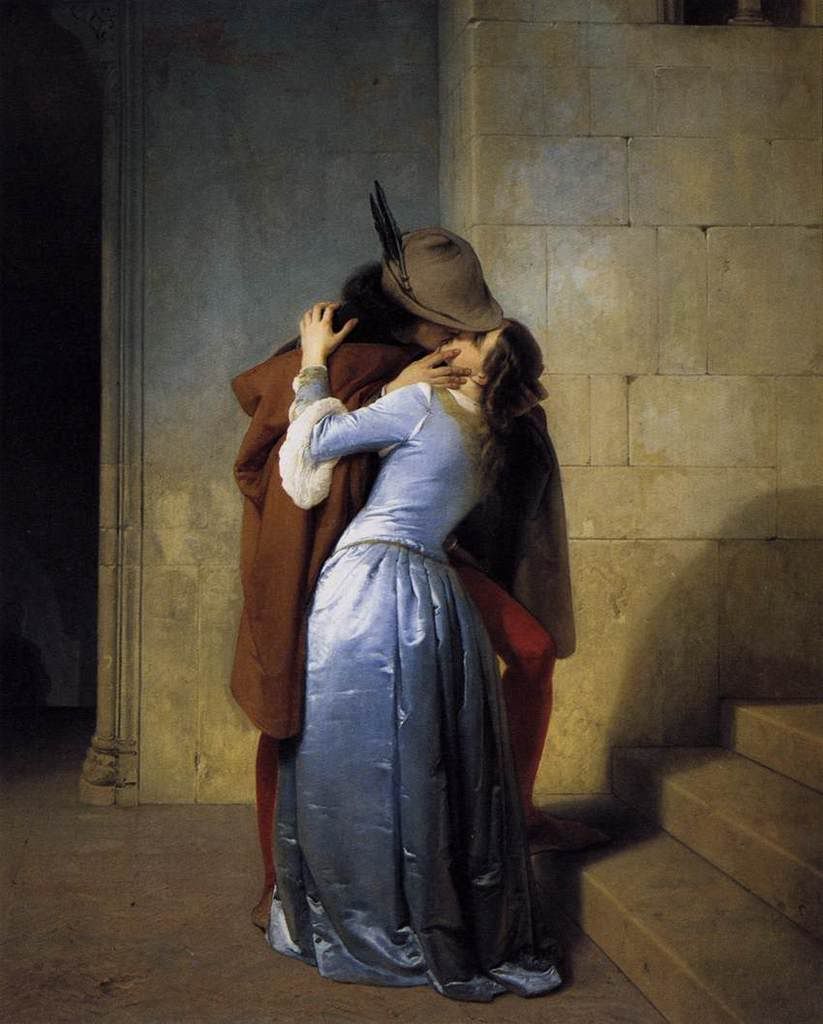
Historians really don't know much about the early history of kissing. Four Vedic Sanskrit texts, written in India around 1500 B.C., appear to describe people kissing. This doesn't mean that nobody kissed before then, and it doesn't mean that Indians were the first to kiss. Artists and writers may have just considered kissing too private to depict in art or literature.

After its first mention in writing, kissing didn't appear much in art or literature for a few hundred years. The Indian epic poem "Mahabharata" describes kissing on the lips as a sign of affection. The "Mahabharata" was passed down orally for several hundred years before being written down and standardized around 350 A.D. The Indian religious text "Vatsyayana Kamasutram," or the "Kama Sutra," also describes a variety of kisses. It was written in the 6th century A.D. Anthropologists who believe that kissing is a learned behavior theorize that the Greeks learned about it when Alexander the Great invaded India in 326 B.C.

There aren't many records of kissing in the Western world until the days of the Roman Empire. Romans used kisses to greet friends and family members. Citizens kissed their rulers' hands. And, naturally, people kissed their romantic partners. The Romans even came up with three different categories for kissing: Osculum was a kiss on the cheek, Basium was a kiss on the lips and Savolium was a deep kiss.

Oct 29, 2009

History of Toothbrush

Photobucket
We bet that a lot of you think brushing your teeth is annoying. You might even try to skip it every now and then, when you think your parents won't catch you! Well, imagine what your life would be like if you didn't have a modern toothbrush to clean your pearly whites. You'd do what people did before the toothbrush was invented: Find another way.

Thousands of years ago, people wanted to keep their teeth and gums clean, their breath fresh and their teeth white, just like people do today. They found different tools with which to do it.

Before toothbrushes, people used rough cloth and water to clean their teeth. They would also rub things like salt and chalk across their teeth to try to get rid of the grime.

The ancient Egyptians made a kind of brush by splitting the end of a twig. And the ancient Chinese chewed on twigs with a special flavor to freshen their breath.

People also used forms of toothpaste that they made out of ingredients you probably wouldn't want to put in your mouth.

Sometimes a powder was made of the ashes of ox hooves and burned eggshells. The ancient Greeks and Romans used materials such as crushed oyster shells and bones.

The Chinese are believed to have made the first natural-bristle toothbrush in the 1400s by using bristles (hair) from pigs' necks. The bristles were attached to a handle made of bone or bamboo.

The first toothbrush that resembles the one you use today was made in England in the 1770s. A man named William Addis came up with the idea while he was in prison, put there for having started a riot. He didn't think the rag he was given was cleaning his teeth well enough, so he saved a small bone from a meal. He put tiny holes in it and used glue to attach pig bristles he had gotten from a prison guard.

The first patent for a toothbrush was awarded to an American named H.N. Wadsworth in 1857, but it wasn't until the invention of nylon in the 1930s that toothbrushes came to look like the ones you use.

And it wasn't until after World War II that Americans started brushing their teeth regularly. U.S. soldiers brought the daily habit back home with them from abroad, and that helped make the practice popular.

Now go ahead and admit it: It would be pretty gross if you didn't have a toothbrush to clean your teeth, wouldn't it?

Source: washingtonpost.com