Recent Posts

Showing posts with label Health. Show all posts

Jan 10, 2011

Why we are not allowed to eat before surgery?

Photobucket
The drugs used for anesthesia are so powerful that they slow or stop your respiratory drive. When you are under general anesthesia a breathing tube is inserted through your mouth and into your airway, (trachea), to help you breathe. The trachea and the esophagus open at nearly the same place in the back of the throat. Under normal conditions a small flap of tissue covers the trachea when we swallow preventing the inhalation of food into the lungs. When you are under general anesthesia this defense mechanism is compromised and contents from the stomach can come up through the esophagus and be inhaled into the lungs. You're also at increased risk of vomiting. These two things can lead to a very dangerous condition called aspiration pneumonia.

The best way to prevent this is to make certain that there is nothing in your stomach that could be inhaled into the lungs. Even small amounts of liquids are dangerous. Smoking, chewing gum, sucking on a mint, or brushing your teeth can cause your stomach to create digestion fluids which can also be inhaled into the lungs. Therefore, it is very important that you follow your doctor or nurses instructions about not eating prior to surgery.

Source: http://ent.about.com/od/livingwithentdisorders/f/eatbeforesurgery.htm

Jan 9, 2011

Is coffee creamer bad for you?

Photobucket
The nutrition label on the powdered coffee creamer in your office or kitchen might list ten calories and just a half a gram of saturated fat. Those sound like healthy low levels. But use a more realistic tablespoon-size serving instead of the miserly teaspoon listed on the nutrition facts label, and you’re looking at 45 calories and three grams of heart-harmful saturated fat. Have three or four servings per day and you’ve unknowingly consumed half a day’s saturated fat.

But the liquid version of these coffee creamers is worse. Instead of using coconut and palm kernel oils, used in the powdered version, the liquid versions use partially hydrogenated soybean or cottonseed oil. Three cups of coffee with that, delivers 1.86 grams of saturated fat, not to mention the 2.76 grams of trans fat, which is more than an entire day’s worth of the kind of fat that raises your bad cholesterol and lowers your good cholesterol.

Read more: http://www.suite101.com/content/is-your-coffee-creamer-silently-killing-you-a232355

Jul 5, 2010

Why do men have Morning Erection?

Photobucket
Morning erections, colloquially referred to as "morning wood" and scientifically defined as nocturnal penile tumescence (NPT) are a healthy and normal physiological response that most men experience. Normally it happens when they are asleep. Men begin having them in early childhood and they continue throughout adult life. They appear during REM (Rapid Eye Movement) sleep, the stage of sleep where dreaming occurs.

However, these involuntary erections have nothing to do with dreams or sexual excitement. They occur when neurological stimulators cause blood to flow into the penis. This ensures that oxygen is properly delivered to the penis and helps keep penile tissue healthy.

Men don't normally notice these erections, but may occasionally encounter them upon waking. On average a healthy male will have between three and five erections in a full night sleep, with each erection lasting between 25 -35 minutes. Men who are unable to have an erection because of a psychological problem still have erections during the night.

Many men say that "morning" or nocturnal erections are noticeably harder than those during the day. This is normal, and a natural result of nocturnal erections.

Source: http://www.mybrotha.com/mens-sexual-health1.asp

Apr 21, 2010

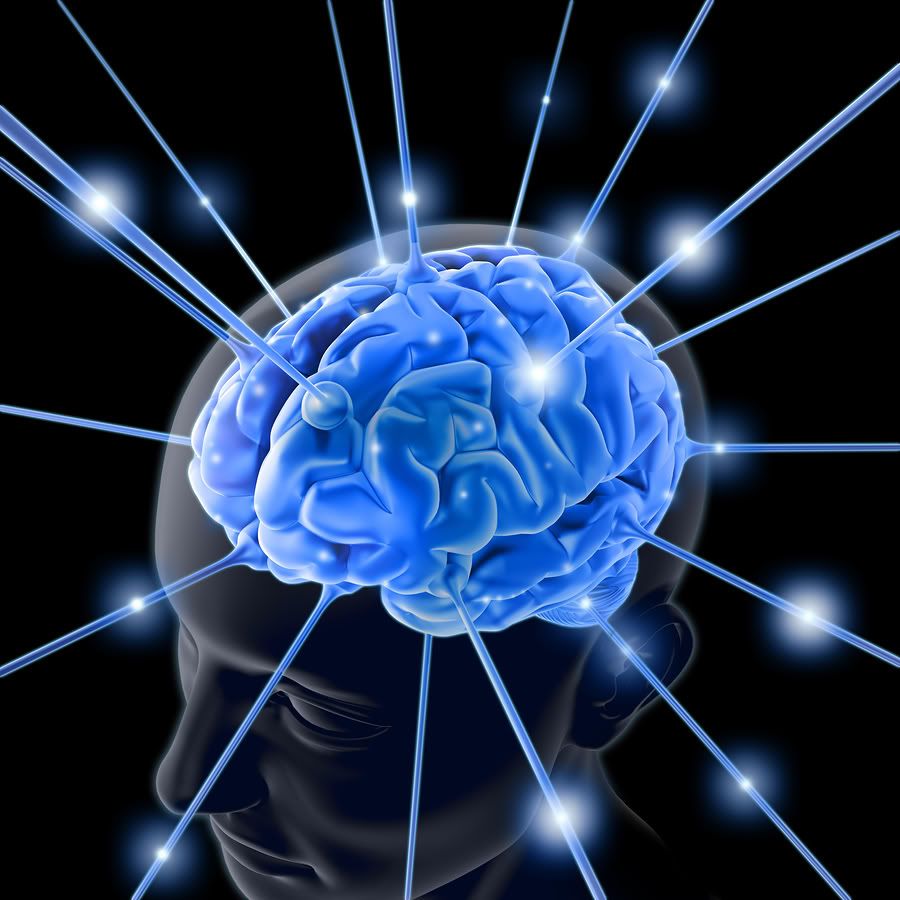
What is the Maximum Memory Capacity of the Human Brain?

Photobucket
The human brain consists of about one billion neurons. Each neuron forms about 1,000 connections to other neurons, amounting to more than a trillion connections. If each neuron could only help store a single memory, running out of space would be a problem. You might have only a few gigabytes of storage space, similar to the space in an iPod or a USB flash drive. Yet neurons combine so that each one helps with many memories at a time, exponentially increasing the brain’s memory storage capacity to something closer to around 2.5 petabytes (or a million gigabytes). For comparison, if your brain worked like a digital video recorder in a television, 2.5 petabytes would be enough to hold three million hours of TV shows. You would have to leave the TV running continuously for more than 300 years to use up all that storage.

Source: http://www.neatorama.com/

Apr 18, 2010

Can stress cause hair to turn grey?

Photobucket
If you look at photos of President Obama taken before he ran for president and then more recently, you’ll notice a distinct difference: where there used to be only dark brown hair, there are now areas of gray dotting the landscape. It seems that the stress of running a country would turn any person’s hair gray. But is stress really to blame? And why does hair turn gray, even for those of us who don’t have jobs quite as stressful as President Obama’s?

Stress doesn’t actually turn hair gray—the color can't change once produced by hair follicles, so hair cannot suddenly turn gray if you are under a great deal of stress. If a single strand of hair starts out brown (or red or black or blond), it's never going to turn gray. Your hair follicles produce less color as they age, so when hair goes through its natural cycle of dying and being regenerated, it’s more likely to grow in as gray beginning after age 35. Genetics can play a role in when this starts. President Obama is in his mid-40s, so aging could explain his graying. But stress may have played a role, too.

Stress can trigger a common condition called telogen effluvium, which causes hair to shed at about three times the rate it normally does. The hair grows back, so the condition doesn’t cause balding. But if you’re middle-aged and your hair is falling out and regenerating more quickly because of stress, it’s possible that the hair that grows in will be gray instead of its original color.

When and how thoroughly your hair turns gray has mostly to do with the genes you inherit from your parents. Though stress may play a role in the process, it would be more helpful to look to past generations rather than your current stress levels to help you predict when or if you’ll go gray. That’s true whether you’re the President of the United States or someone with a less stressful job.

Source: http://health.msn.com/health-topics

Feb 12, 2010

Is it safe to drink urine?

Photobucket
Short answer – yes. Long answer – probably, yes. There is nothing particularly dangerous about drinking your own urine and none of the compounds found in urine are going to kill you. In fact, some people regularly drink their urine for health, healing, and cosmetic purposes. This practice is known as Urine Therapy. Nasty crap if you ask me, but to each his own.

The safety of drinking it changes depending on the situation you’re in though. A normal person with a healthy intake of food and water every day is more than safe why downing a glass of their pee. This is because they have enough water in their body – mainly their kidneys – to dilute the urine and the compounds it contains.

But what about someone in an emergency or survival situation? Often, when you’re in a survival situation you’re dehydrated. If you’re thinking of drinking your own piss to stay alive, you damn well should be. When you’re dehydrated your urine is concentrated. The sodium content, which is already quite high, is even higher. This also means the other chemicals and any toxins your kidneys had filtered out are more concentrated.

When you drink your urine when you’re already dehydrated you’re introducing concentrated chemicals back into your body for your kidneys to filter again. You might get a very slight amount of hydration from doing it, but as the urine if cycled through your kidneys again and becomes even more concentrated it will quickly become more of a danger than a benefit to drink it.

Feb 2, 2010

Will eggs raise your cholesterol?

Photobucket
For more than 50 years, eggs have been called unhealthful because they are among the foods that contain the highest levels of cholesterol. However, in recent years eggs have been rehabilitated. In Bangkok, a team of researchers at Mahidol University showed that adding an egg a day to the diets of healthy people in Thailand raised the good HDL cholesterol that prevents heart attacks. It did not affect the bad LDL cholesterol or triglycerides.

Adding as many as three eggs per day to your diet will not raise cholesterol. More than 80 percent of the cholesterol in your body is manufactured by your liver, and less than 20 percent comes from the food you eat. When you eat more cholesterol, your liver makes less. When you eat less cholesterol, your liver makes more. However, if you add eggs you must subtract another equal source of calories, because increasing caloric intake will raise cholesterol. So this is not an invitation to eat an unlimited amount of eggs. The study supports other research showing that eggs in moderation are not harmful, and that up to one egg a day may have specific health benefits.

Jan 21, 2010

Why Secondhand Smoke is Dangerous?

Photobucket
Secondhand smoke has a variety of names, including environmental tobacco smoke (ETS), passive smoking, and involuntary smoking. By definition, secondhand smoke is "sidestream smoke" (smoke from the burning end of a lit cigarette) or "mainstream smoke" (smoke that is exhaled from the lungs of a smoker).

When doctors refer to secondhand smoke, they are mostly describing sidestream, or ambient, smoke. Put another way, when a smoker lights up a cigarette, roughly 80 percent of the smoke burns off into the room and only 20 percent is inhaled. Sidestream smoke, then, is more dangerous than mainstream smoke.

While both types of smoke share most of the same compounds (including more than 200 substances known to be harmful) sidestream smoke has much higher concentrations of ammonia and chemical carcinogens such as benzene (an additive formerly found in gasoline before it was deemed to be too dangerous). A primary reason for this is that when a smoker inhales, he or she is drawing oxygen through the lit end of the cigarette, thereby nearly doubling the heat at which the smoke is produced. This increase in temperature results in the formulation of smaller, less harmful compounds.

Secondhand smoke is not solely derived from cigarettes; pipes and cigars produce many of the same harmful substances. In fact, a cigar produces much more sidestream smoke than a cigarette because of its larger size. Recent studies have shown that even hookahs carry a significant secondhand smoke risk

You may be surprised about the contents of secondhand smoke. From the Centers for Disease Control and Prevention, here is a list of some chemicals in secondhand smoke and the other places you can find them:
  • Carbon monoxide (also found in car exhaust)
  • Arsenic (rat poison)
  • Ammonia (window cleaner)
  • Acetone (nail polish remover)
  • Hydrogen cyanide (gas chamber poison)
  • Napthalene (mothballs)
  • Sulphur compounds (match tips)
  • Formaldehyde (embalming fluid)
  • Butane (lighter fluid)

Jan 8, 2010

Why do you feel sleepy after eating?

Photobucket
Eating sugary foods or those made from flour, such as bakery products or pastas, causes blood sugar to rise higher than normal. This causes your pancreas to release large amounts of insulin, which drives one of the protein building blocks called tryptophan from your bloodstream into your brain, where it is converted to serotonin that makes people fall asleep naturally at night.

Many meals contain the L-tryptophan. This essential (cannot be made in the body) amino acid needs to be taken on an empty stomach and without any other amino acids or protein in order to make you drowsy.

Some people think, however, that feeling drowsy is not necessarily due to this tryptophan. Tracy Gensler, a registered dietitian in Chevy Chase, U.S.A, says tryptophan does not deserve nearly the blame it gets for making us sleepy. "The body wants to focus its efforts on digestion," Ms. Gensler says. "Drowsiness occurs after any big meal, regardless of the meal components. Digestion of any large meal, whether it's a high-protein, a high-fat or a high-carbohydrate meal, causes the familiar after-meal drowsiness."

Jan 1, 2010

10 Reasons You Should Drink Beer

Photobucket
1. Reduces General Heart Disease
Vitamin B6, found in beer, prevents the build-up of homocysteine, an amino acid which has been linked to heart disease. Higher levels of homocysteine in our bodies can make us more susceptible to vascular and heart diseases.

2. Coronary Artery Disease (CAD)
Case studies have shown that 30-35% of men who drink beer in moderation are less likely to have heart attacks. Polyphenol, an antioxidant, is just as much present in beer as it is in red wines.

3. Reduces Risk of Coronary Thrombosis
Coronary thrombosis occurs when the opening of an artery becomes so small, the flow of blood is blocked. Beer acts as a blood thinner, reducing the risk of a heart attack.

4. Reduces Risk of Atherosclerosis
Beer boosts levels of high-density lipoprotein (HDL), the good cholesterol, lowers insulin levels, which is good for non-diabetics because it reduces the chance of developing atherosclerosis, or hardening of the arteries.

5. Reduces Risk of Kidney Stones
It is not 100% certain why kidney stones form. Genetics and diet have played a major role with those individuals who develop them. Kidney stones may be reduced in middle-aged men by 40%. Scientists are unsure if these results were due to the water, alcohol, or hops.

6. Insomnia
A common disorder that affects 1 out of every 10 adults. A good night sleep is beneficial for you energy level and mood. The general affect of beer has a tendency to make one drowsy.

7. Cancer
The hops in beer contain xanthohumol, a powerful antioxidant. Concentrations of xanthohumol occur naturally in dark beer and can assist your body in stopping the early stages of tumor growth.

8. Reduces Osteoporosis
Hops in beer contain phyto-estrogens, a compound that will help reduce hot flashes and fight osteoporosis in postmenopausal women. Beer should not be used as a replacement for estrogen therapy.

9. Lowers Cholesterol
Moderate consumption of beer has been shown to increase the HDL cholesterol and lowers the low-density lipoprotein (LDL), also know as the “bad cholesterol” in postmenopausal women. Analyzed data suggests more than one or two servings per day is not productive and considered detrimental.

10. Hypertension
Studies have shown a 14% lowered risk in high blood pressure by women consuming two or three beers a week. Hypertension is a disease where the blood pressure is chronically elevated.

An average 12oz beer contains 150 calories, no fat, no cholesterol, no caffeine, and is 92% water.

Dec 24, 2009

Does Drinking Ice Water Burn Calories?

Photobucket
You have an 8-ounce glass of ice-cold water in front of you. That's about 240 grams of water.

When you drink the ice water, which is roughly 4 degrees Celsius, your body will expend calories to bring it to body temperature, which is about 37.5 degrees Celsius; that's a difference of 33.5 degrees. To raise 1 gram of water 1 degree Celsius, 1 calorie is expended. (This is a "little" calorie - what scientists use to measure small units of energy. The calories we refer to colloquially are actually 1,000 of these and are known as kilocalories in the science world.)

Raising 240 grams of water by 33.5 degrees Celsius will take 33.5 calories x 240 grams of water, which equals 8,040 little calories.

Dividing 8,040 by 1,000 gives us 8.04 food calories (kilocalories). Therefore, you’ll burn about 8 calories for each glass of iced calorie-free beverage you drink. That's equal to about one Life Saver: not exactly a weight-loss miracle.

Using Clemens's figures, it would take about 435 8-ounce glasses of ice water to lose a pound.

Dec 7, 2009

Is it Wise to remove Wisdom tooth?

Photobucket
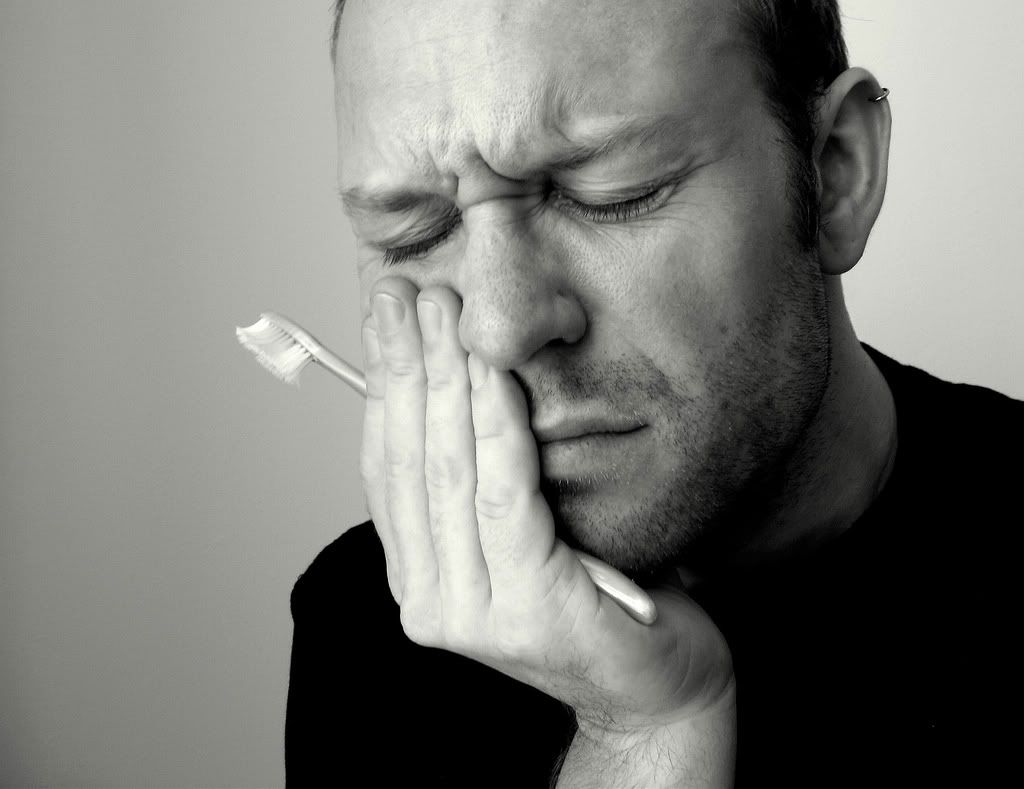
Wisdom tooth or third molar extraction is expensive, and recovering from the surgery is no easy feat, considering that pain, bleeding, swelling, infection and nerve injury are but a few of the complications. Still, removing wisdom teeth is recommended by many dentists to avoid the pain and periodontal disease that results from an impacted tooth. The surgery should be done during young adulthood, before the teeth attach to the jaw and become too difficult to extract.

In 2007, however, dentist Jay W. Friedman claimed in the American Journal of Public Health that at least two-thirds of wisdom tooth extractions are unnecessary. He and some other dentists argue that these teeth will come in at the proper position and cause no trouble. These dentists say that instead of simply doing preventative removals for most young people, we should only remove wisdom teeth that are impacted. Other dentists say that these teeth are still difficult to clean and should be removed.

Source: http://health.howstuffworks.com/no-wisdom-teeth2.htm

Nov 21, 2009

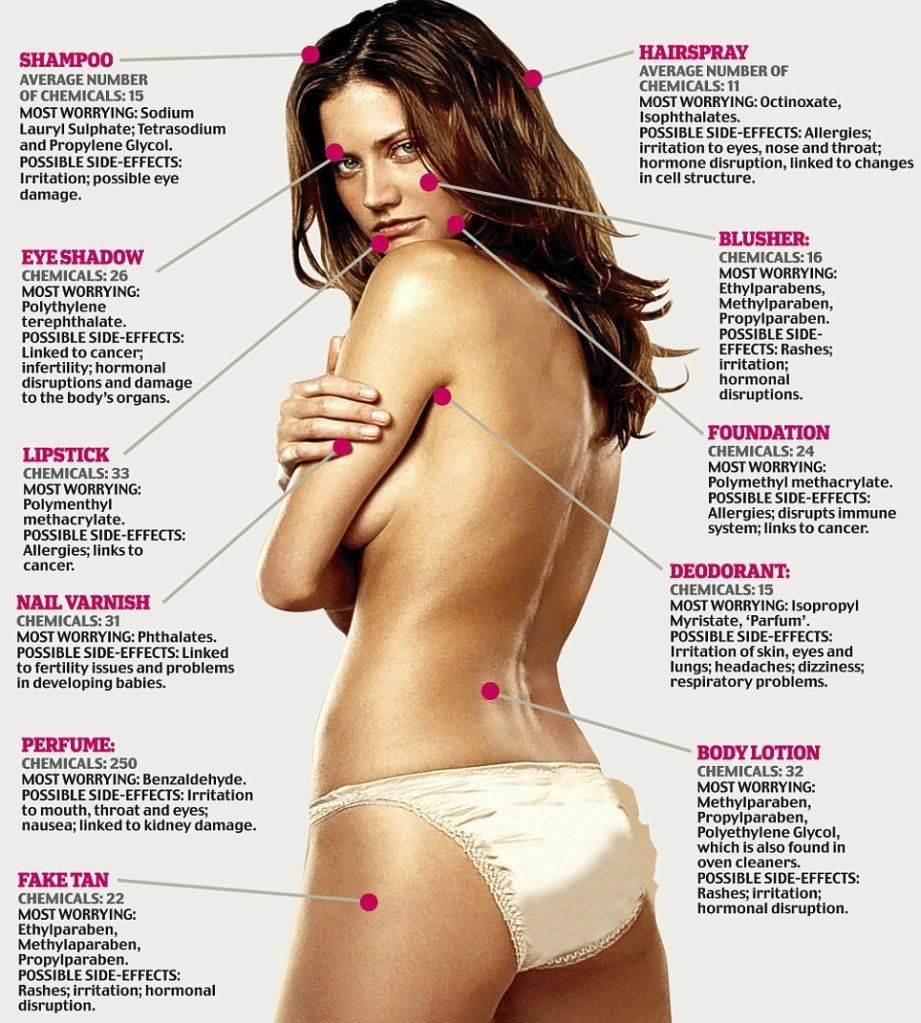
The 515 chemicals women put on their bodies everyday


Women and beauty products - it's a love affair that's been going on for centuries. And no wonder. There's nothing like a new lipstick or favourite perfume to make us look and feel good. Or so we thought...

In fact, according to a new report, most of our favourite cosmetics are cocktails of industrially produced and potentially dangerous chemicals that could damage our health and, in some cases, rather than delivering on their potent 'anti-ageing' promise, are causing us to age faster.

Research by Bionsen, a natural deodorant company, found that the average woman's daily grooming and make-up routine means she 'hosts' a staggering 515 different synthetic chemicals on her body every single day.

Many of those are also used in products such as household cleaners, and have been linked to a number of health problems from allergies and skin sensitivity to more serious hormonal disturbances, fertility problems and even cancer.

Parabens, for example, which are designed to preserve the shelf-life of your cosmetics, are one of the most widely used preservatives in the world, and are found in shampoos, hair gels, shaving gels and body lotions. But their use is becoming increasingly controversial - a range of different studies has linked them to serious health problems including breast cancer, as well as fertility issues in men.

Click on the picture for enlarged view.

For more details: http://www.dailymail.co.uk/femail/beauty/article-1229275/Revealed--515-chemicals-women-bodies-day.html

Nov 20, 2009

Facts you didn't know about your body

Our body is capable of producing aspirin.
Eating fruits and vegetables may help the human body make its own aspirin. Findings from the Journal of Agriculture and Food Chemistry indicate that study participants who received benzoic acid, a natural substance in fruits and vegetables, could make their own salicylic acid, the key component that gives aspirin its anti-inflammatory and pain-relieving properties.

Taking a nap at work is good for you.
A 20 minutes nap can improve your overall alertness, boost your mood, and increase productivity. William Anthony, co-author of The Art of Napping at Work (Larson Publications, 1999), says the post-nap boost can last for several hours. In addition, your heart may reap benefits from napping. In a six-year study of Greek adults, researchers found that that men who took naps at least three times a week had a 37 percent lower risk of heart-related death.

Ejaculation may cause men to sneeze.
Some men experience pain, headaches, or sneezing as a result of ejaculation. The increased activity in the nervous system during orgasm may be the culprit in triggering headaches. A possible explanation for the sneezing is that in the brain, the center for orgasms is close to the centers for yawning and sneezing.

Every person has a unique tongue print.
Just like fingerprints. The tongue is a unique organ in that it can be stuck out of mouth for inspection, and yet it is otherwise well protected in the mouth and is difficult to forge. The tongue also presents both geometric shape information and physiological texture information which are potentially useful in identity verification applications.

The foot is home to the body's thickest area of skin.
The skin on the palms and the soles of the feet is 4 mm thick and the thickest skin in the body, the heel portions of the feet being the thickest portions. It's also got the most sweat glands than in any other area.

The body is taller in the morning than in the evening.
The body is taller in the morning than in the evening. You might want to schedule that basketball game for first thing in the morning. That's because our bodies are on average about half an inch taller in the morning, thanks to excess fluid between our discs, which is replenished while we sleep. As the day goes on, and our bodies undergo the strain of standing, the discs get compressed and the fluid seeps out, so the body loses that small bit of extra height.

Body position affects your memory.
Can't remember your anniversary, hubby? Try getting down on one knee. Memories are highly embodied in our senses. A scent or sound may evoke a distant episode from one's childhood. The connections can be obvious (a bicycle bell makes you remember your old paper route) or inscrutable. A recent study helps decipher some of this embodiment. An article in the January 2007 issue of Cognition reports that episodes from your past are remembered faster and better while in a body position similar to the pose struck during the event.

Blondes have more hair.
They're said to have more fun, and they definitely have more hair. Hair color determines how dense the hair on your head is. The average human has 100,000 hair follicles, each of which is capable of producing 20 individual hairs during a person's lifetime. Blondes average 146,000 follicles while people with black hair tend to have about 110,000 follicles. Those with brown hair fit the average with 100,000 follicles and redheads have the least dense hair, with about 86,000 follicles.

The average person expels flatulence 14 times each day.
Even if you'd like to think you're too dignified to pass gas, the reality is that almost everyone will at least a few times a day. Digestion causes the body to release gases which can be painful if trapped in the abdomen and not released.

Having orgasms prevent men from prostate cancer.
Two large studies, reported in 2003 and 2004, found that middle-aged men who had at least 4 orgasms a week had a reduced risk of prostate cancer by as much as one-third. Some researchers speculate that ejaculations may clear the prostate of carcinogens.